
Social Engineering
CyberSathi Desk
How Social Engineers Think: What I Learned Watching Them Work
A practitioner's look at how social engineers exploit trust in India. Real cases, hard lessons, and five things you can do today to stop them.
Human-focused manipulation and pretexting.
A practitioner's look at how social engineers exploit trust in India. Real cases, hard lessons, and five things you can do today to stop them.

WhatsApp fraud has cost Indian users ₹500+ crore. Learn how scammers impersonate family, hijack accounts, and steal OTPs—and what actually stops them.

Deepfake fraud is no longer science fiction. Real Indians are losing lakhs to AI-generated videos of themselves. Here's what's actually happening—and how to defend yourself.

Social engineers exploit trust, not passwords. An Indian practitioner's guide to understanding their methods—and why your skepticism is your only defense.

Social engineering isn't about hacking your password. It's about knowing you'll answer the phone. How scammers weaponize trust—and what actually stops them.

Deepfake scams are stealing lakhs by impersonating family members via AI-generated voice and video. Learn how they work and how to protect yourself.

An elderly woman in Bengaluru fell victim to a sophisticated digital arrest scam, losing Rs 24 crore to fraudsters. The scammers impersonated law enforcement officials and convinced the victim that she was involved in illegal activities, pressuring her to transfer large sums of money to 'secure' her assets. This case highlights the evolving tactics used by cyber criminals who exploit fear and authority to manipulate victims into financial transfers. Authorities have registered cases and are investigating the fraud network. Citizens are advised to verify official communications through official channels and avoid sharing personal or financial information with unverified callers. Source: MSN.

An elderly man from Gujarat fell victim to an elaborate 'digital arrest' scam, a social engineering fraud where criminals impersonate law enforcement officials. The scammers contacted the victim claiming illegal activities on his account and threatened arrest, pressuring him to transfer money to a supposed 'safe account.' This scheme exploits fear and urgency to bypass victims' rational thinking. Such frauds have increased significantly across India, targeting senior citizens who are often less familiar with digital verification processes. Victims are advised to verify caller identity independently, never share personal details with unverified callers, and report suspicious communications to local cybercrime authorities immediately. Source: Devdiscourse.

A Major General and other military officials are undergoing court martial proceedings in connection with a job recruitment scam in Kapurthala. The case involves unauthorized recruitment practices and misuse of official positions for personal gain. The scam reportedly affected multiple candidates seeking military employment. Investigation authorities discovered fraudulent job offers and financial irregularities in the recruitment process. The court martial proceedings represent serious disciplinary action against military personnel accused of misconduct and breach of service conduct. This case highlights the importance of verifying employment opportunities through official channels only. Candidates are advised to be cautious of unsolicited job offers, even from seemingly credible sources. Source: The Tribune.

Fraudsters are using artificial intelligence and biometric technology to conduct fake online job interviews, targeting unsuspecting job seekers. These scams typically involve criminals posing as legitimate recruiters and conducting video interviews where they collect personal biometric data including facial recognition, fingerprints, or voice samples. This stolen biometric information is then used for identity theft and unauthorized access to financial accounts. Job seekers in India should verify company credentials through official websites, avoid sharing biometric data with unverified sources, and be cautious of interview requests from unknown numbers or email addresses. Report suspicious recruiting activity to relevant authorities immediately. Source: The News Mill.

In this insightful video, viewers learn how cybercriminals are leveraging artificial intelligence and voice deepfake technology to execute sophisticated scams. These malicious actors utilize AI to create realistic audio imitations of trusted individuals, making it easier to deceive victims. The video discusses various scenarios where these deepfakes can be employed, including impersonating company executives for financial fraud or scamming family members for urgent money transfers. Additionally, it highlights the necessity for vigilance in verifying communication methods, as voice deepfakes can be incredibly convincing. Viewers are encouraged to adopt proactive measures such as independent verification of any suspicious requests, employing multi-factor authentication, and being cautious with personal information shared online. Given the rapid advancement of these technologies, it's crucial for Indian citizens to remain informed and watchful to protect themselves from becoming victims of such elaborate cybercrimes.

इस वीडियो में IPS अधिकारी M Harsha Vardhan ने व्हाट्सएप वीडियो कॉल ब्लैकमेलिंग से जुड़े मुद्दों को विस्तार से समझाया है। उन्होंने बताया कि इस प्रकार के ठगी को 'सेक्सटॉर्शन स्कैम' कहा जाता है, जहाँ अपराधी वीडियो कॉल के माध्यम से पीड़ितों को अनुचित या निजी सामग्री रिकॉर्ड करके धमकाते हैं। वीडियो में बताया गया है कि ये अपराधी अक्सर फर्जी प्रोफाइल का उपयोग करते हैं और बिना किसी पूर्व संकेत के अपने शिकार को ट्रैप करते हैं। अगर कोई व्यक्ति ऐसे ठगी का शिकार होता है, तो उसे तुरंत पुलिस या साइबर क्राइम सेल से संपर्क करना चाहिए और किसी भी तरह की व्यक्तिगत जानकारी साझा करने से बचना चाहिए। साथ ही, यह भी बताया गया कि अपने ऑनलाइन प्राइवेसी सेटिंग्स को मजबूत करना और अनजान संपर्कों से सावधान रहना अत्यंत महत्वपूर्ण है। यह वीडियो भारतीय दर्शकों को साइबर सुरक्षा के बारे में जागरूक करने का एक महत्वपूर्ण प्रयास है।

In this insightful podcast episode, host Amit Dubey exposes the tactics used by scammers and hackers in online task scams. He shares an unsettling experience where his team received a call from a scammer, providing a live overview of how these fraudulent schemes operate. Listeners learn about the common characteristics of such scams, including the promise of easy money for simple online tasks, which are often too good to be true. Amit highlights the importance of recognizing red flags such as unsolicited calls, pressure to act quickly, and the request for personal information. The podcast emphasizes the significance of awareness and skepticism in these situations, encouraging viewers to be vigilant and report suspicious activities. It serves as a crucial reminder for Indian internet users to safeguard their personal data and financial information from cybercriminals. By understanding these scams, individuals can better protect themselves and their families from falling victim to online fraud.

Is video mein, 'AI Deepfake' ke khauf par charcha ki gayi hai, jo ki aaj kal ke cyber crime ka ek bada hissa ban raha hai. Deepfake technologies ka istemal karke, logon ki tasveeron aur awaz ka galat istemal kiya ja raha hai, jisse scandals aur phishing scams ka khauf badh raha hai. Yeh video dikhata hai kaise criminals is technology ka fayda uthakar logo ko dhokha de rahe hain, jaise ki fake videos banakar unki soch ko prabhavit karna. Audience ko yeh bataya gaya hai ki kaise AI ka sahara lekar, chori aur identity theft jaise cyber crimes ko badhawa mil raha hai. Iske alawa, cyber security experts ke sath ki gayi baatein is trend ke khilaf samajik jagrukta failane aur suraksha ke liye sabko apni jagah se sambhalne ki zarurat par zor deti hain. Yeh video humein yeh samjhaata hai ki deepfake scams ka sahi samay par pata lagana aur unse bachne ke liye awareness zaroori hai.

The video 'Digital Arrest' highlights the cunning strategies employed by scammers who manipulate individuals and organizations through various deceptive techniques. It emphasizes the fact that despite their intricate scams, these perpetrators can be thwarted with the right awareness and defensive measures. Viewers are educated on types of scams prevalent in India, including phishing tactics that trick users into revealing sensitive information, as well as UPI fraud where scammers exploit digital payment systems. The urgency of understanding these risks cannot be overstated, as cybercrimes are on the rise, targeting vulnerable populations, including those unfamiliar with technology. Additionally, the video underscores the importance of staying updated on how to identify suspicious communications and urging individuals to verify any requests for personal information. By being vigilant and educated, everyone can enhance their cyber hygiene and protect themselves from becoming victims of these digital con artists.
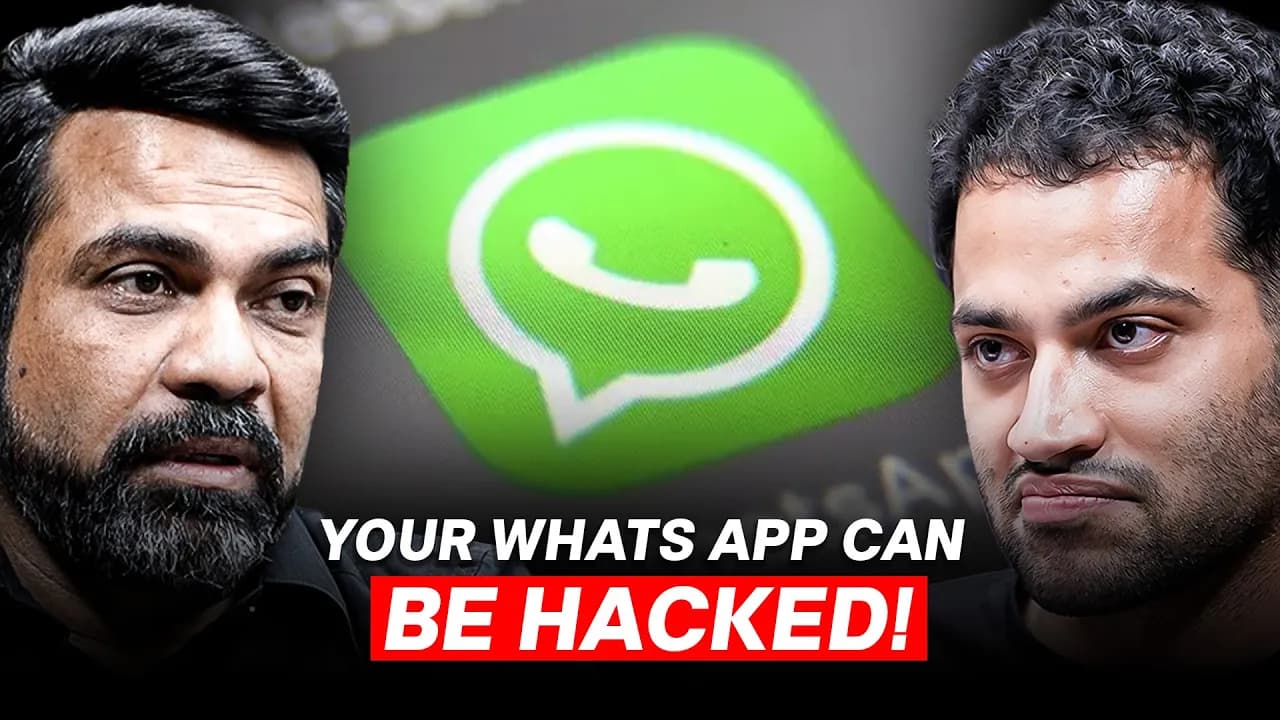
Raj Shamani Clips
इस वीडियो में Amit Dubey ने बताया है कि कैसे WhatsApp हैक होने का जोखिम बढ़ता है, जब users टू-फैक्टर ऑथेंटिकेशन (2FA) का उपयोग नहीं करते। उन्होंने उदाहरण दिया कि दिवाली के समय गुड़गांव में कई डॉक्टर्स का WhatsApp हैक हुआ था, क्योंकि उन्होंने सुरक्षा सेटिंग्स को अनदेखा किया। 2FA ऐप को और सुरक्षित बनाता है, इसलिए यह आवश्यक है कि सभी उपयोगकर्ता इसे सक्षम करें। वीडियो में यह भी बताया गया कि हैकर्स कैसे ओटीपी (OTP) चुरा सकते हैं और मैनिपुलेट कर सकते हैं, जिसके द्वारा वे किसी के WhatsApp और बैंक खातों तक पहुंच प्राप्त कर सकते हैं। इसलिए उपयोगकर्ताओं को अपनी संख्या की सुरक्षा के अलावा, ई-सिम का उपयोग करने की भी सिफारिश की गई है, जिससे सिम स्वैपिंग के खतरे को कम किया जा सके। वीडियो का मुख्य उद्देश्य विवरण और सावधानी बरतने के लिए जागरूकता बढ़ाना है, जिससे कोई भी साइबर क्राइम का शिकार न हो।